


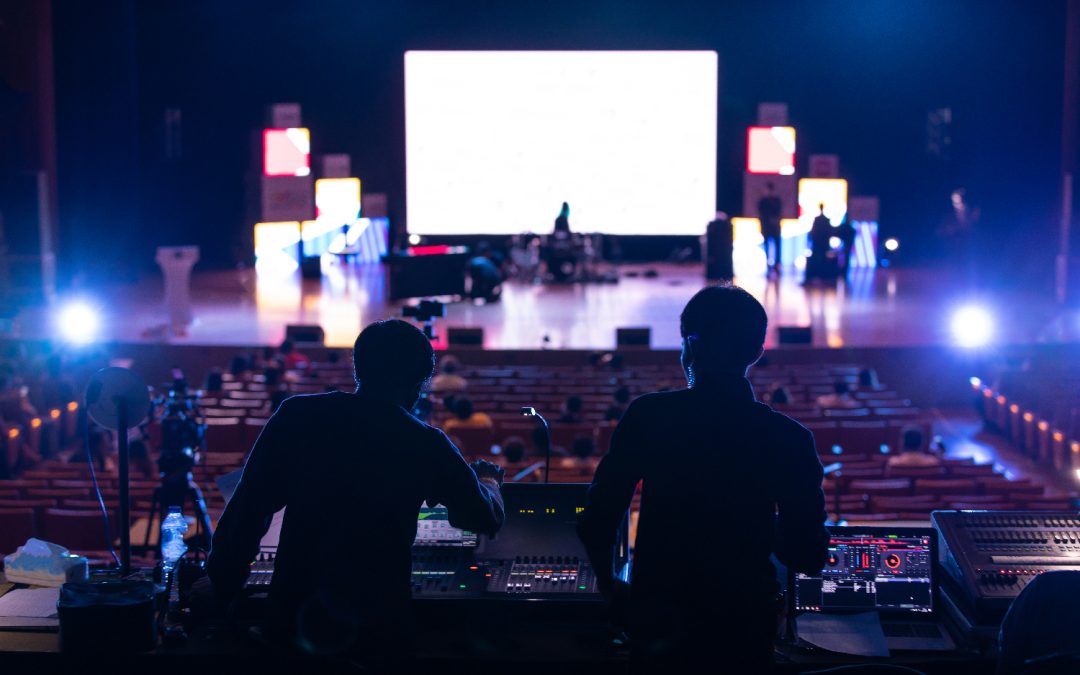
The event industry has gone through many changes in the last few years. The industry players had to innovate and adapt to the restrictions that were in place. The event industry has momentarily become digital.
But, are these new trends here to stay? What does the future of events look like? Here's a portrait we've painted on the subject!
Are digital events here to stay?
It is an understatement to say that the event industry has been particularly affected by the pandemic context of the last three years. In 2020, Radio-Canada even went so far as to state that event companies are "the great forgotten of the health crisis".
But today, can we say that the pandemic has also made the field evolve instead of only having scratched it? From the point of view of technological innovation, it would seem so!
Towards a hybrid digital future
More than ever, players in the field have been forced to be innovative in order to stay afloat. With multiple confinements proving that social contact - in case you had any doubts - is essential to humans. Obviously, the face-to-face aspect of events is still in effect. However, we have tasted the benefits of the virtual and many are asking for more.
Suddenly, distance, travel and finances are no longer an obstacle: we turn to hybrid events.
Here are 5 important benefits:
- Access to the whole world: both in terms of clients and speakers, panelists and experts of all kinds.
- Cost reduction.
- More participation: busy parents, people with reduced mobility; everyone can participate with a click!
- Eco-responsible: a smaller CO2 footprint and less waste.
- Statistical reports: instant feedback! For example, do people leave the session quickly? You can even include a small survey at the end of the session!
It would appear that the next generation of event planners feels the same way. According to a study conducted by Shape Your Com, MyEN and Meet-In, 78% of students in the events field - out of 514 students from 33 schools and universities - believe that event success is connected to technological change. So the industry's future entrepreneurs seem to believe in the digitization of the field.
Events: a green shift in sight?
The aforementioned study also revealed that more than half of the respondents were dissatisfied with the efforts made in the sector in terms of environmental concerns.
As the collective ecological consciousness continues to grow, fewer and fewer customers are attracted to "ephemeral events in a world that wants to be sustainable" - as one student who participated in the study put it so well.
Sustainable events: small and large scale solutions
A simple Google search is all it takes to see that the event industry has already set its flashing light on a greener path. On a smaller scale, we realize that many companies in the field now offer more sustainable options: ethical and local food and beverages, zero paper, public transportation, eco-friendly dishes, virtual options, etc.
Larger projects such as Net Zero Carbon Events will also have a significant impact on the event industry. Internationally recognized companies regularly publish articles aimed at guiding event companies towards a more sustainable approach. BCD Meeting & Events recently published a guide entitled The Green White Paper: Sustainability in Meetings and Events.
In Quebec, the Conseil québécois des événements écoresponsables, a non-profit organization, even offers training to facilitate the organization of sustainable and ecoresponsible events.
The next generation: what job should you do in the event industry?
There are 3 main branches in the event industry: organization, suppliers and marketing.
1. The event organization
Often in the form of an agency, the event organizer specializes in the organization of events from A to Z.
Here are three key trades in this stage:
- The project manager is in contact with the client and will be responsible for creating a strategy to achieve the client's objectives.
- The technical manager is in charge of all the logistical aspects, both human and material. Once on the site, he is the one who gives the directives!
- The communications manager ensures the smooth running of communications both internally and externally. For example, he or she will be responsible for mandating and communicating with the marketing team.
2. Behind the scenes: The suppliers
Once the project is approved and the goal is set, it's time to find suppliers. What exactly is a supplier? It's the one who provides a service once the D-day comes!
Does your client want a professional to handle the entertainment? It’s up to you to find the best DJ or emcee. Need to provide a meal for the guests? You’ll find an experienced caterer! You get the picture!
It goes without saying that in addition to being talented, you need excellentpeople skills to work in this field!
3. The mandate of event marketing? Attract the crowd!
Basically, marketers make sure that the target audience is engaged by the event. Once the event organization has taken off, it's up to the marketing team to make sure the event is appealing and stands out from the crowd!
4-Celebrations.com : An event platform
4-Célébration.com is a platform that brings these three event industry players together in one place! Without having to hire an agency, you’ll find everything you need to organize your event right here. It’s a one-stop shop where you can find services, compare prices, and place orders!
Link to the study: